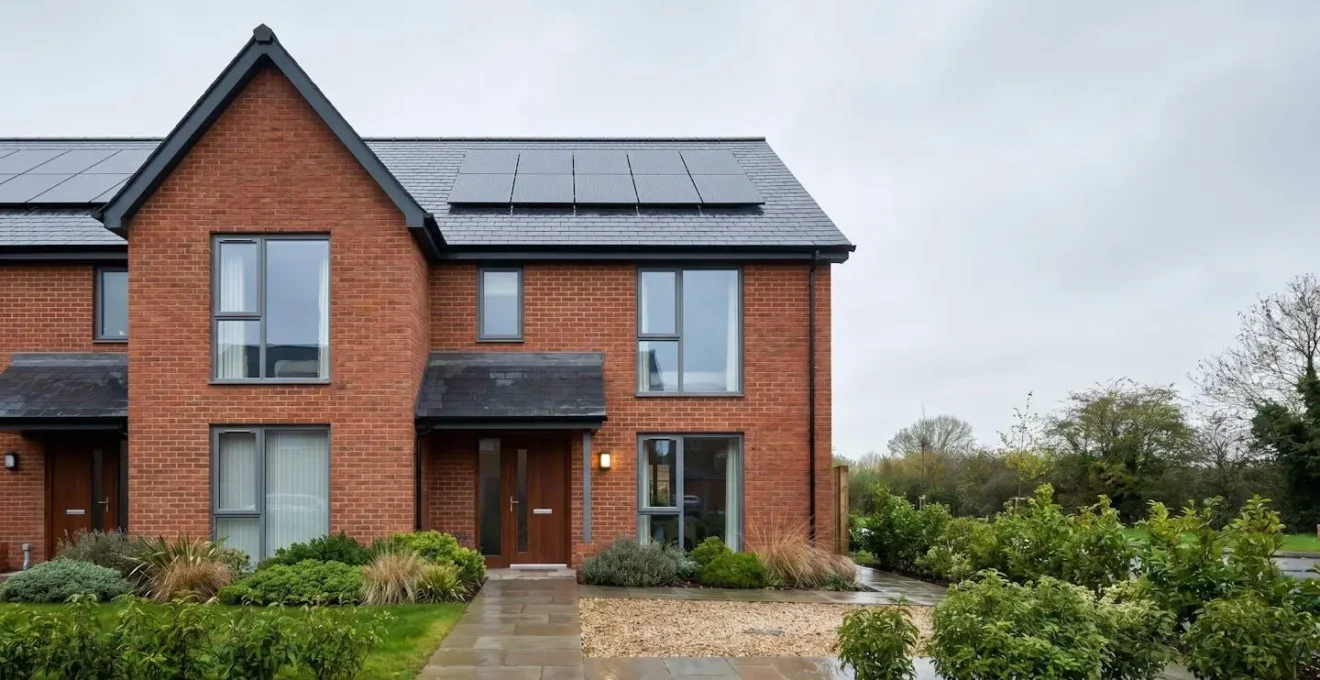
The fastest payback on energy upgrades isn’t from the biggest project, but the smartest sequence: first, mitigate regulatory risk, then capture immediate bill savings, and finally, leverage these to boost property value.
- Prioritise compliance (achieving EPC E, then C) to eliminate fines and unlock rental/resale potential.
- Focus on “fabric-first” upgrades like loft insulation for the highest direct savings ROI before investing in expensive technology.
- Leverage high-value upgrades (e.g., raising the EPC to B) with financial accelerators like Green Mortgages to boost property value and shorten the payback period.
Recommendation: Audit your property against upcoming regulatory deadlines first, then target fabric improvements before considering high-capital tech like solar panels.
For UK homeowners and landlords, the push for energy efficiency often feels like a confusing mix of environmental duty and financial burden. You’re told to upgrade your boiler, insulate your walls, and consider solar panels, but a critical question often goes unanswered: which of these investments actually pays for itself the fastest? Many property owners chase bill savings with expensive tech, only to find the return on investment (ROI) stretches over a decade or more.
The common advice focuses on a simple “spend to save” model. However, this overlooks the complex financial reality of property ownership, where value is measured not just in lower utility bills, but in rental yield, capital appreciation, and regulatory compliance. The true key to a fast payback isn’t just about reducing energy consumption; it’s about understanding a strategic hierarchy of upgrades. It’s about knowing what to do first to eliminate financial risk, what to do next for the quickest cash-flow improvement, and how to leverage those improvements to unlock greater property value.
This guide moves beyond generic advice. We will provide an ROI-focused framework for your property, treating energy efficiency as a strategic financial decision. We’ll analyse which upgrades are non-negotiable legal requirements, which offer the best bang-for-buck on bill reduction, and how these improvements can be used to increase rent, secure better mortgage terms, and ultimately boost the final sale price of your asset.
This article provides a clear, step-by-step analysis to help you make informed decisions. We will explore the financial consequences of EPC ratings, compare the payback periods of common upgrades, and reveal how to strategically sequence your investments for maximum return. The following summary outlines the key areas we will cover.
Summary: A Strategic Financial Guide to UK Property Energy Upgrades
- Why Could an EPC Rating Below E Make Your Property Unrentable?
- Loft Insulation or New Boiler: Which Cuts Bills More in a 3-Bed House?
- How Much Can a Smart Thermostat Really Save You Each Winter?
- Can Spending £25,000 on Solar Panels Ever Be Recovered in Sale Price?
- Should You Improve Your EPC Before Remortgaging?
- Which £5,000 Upgrade Allows You to Raise Rent by 10%?
- New Windows or New Render: Which Adds More Value to Your Home?
- Which Exterior Facade Improvements Deliver the Highest Return?
Why Could an EPC Rating Below E Make Your Property Unrentable?
The concept of an “unrentable” property has moved from a theoretical risk to a harsh financial reality for UK landlords due to the Minimum Energy Efficiency Standards (MEES). Since 2020, it has been unlawful to grant a new tenancy for a property with an Energy Performance Certificate (EPC) rating below E. This isn’t merely a suggestion; it’s a hard-and-fast rule backed by severe financial penalties. Ignoring MEES exposes a landlord to fines that can be substantial, with the UK government planning to raise the maximum penalty for non-compliance. In fact, a property can incur a fine of £30,000 per property per breach under proposals for 2030, a figure that can wipe out years of rental profit.
Beyond direct fines, a sub-E rating triggers a cascade of hidden costs that erode a property’s profitability. These include:
- Lost Rental Income: As tenants become more aware of energy costs, properties with F or G ratings are harder to let, leading to longer void periods.
- Insurance Complications: Many UK insurers now require a valid EPC of E or above as a condition for standard landlord coverage, creating potential compliance and insurability issues.
- Public Record of Non-Compliance: Breaches are recorded on the public PRS Exemptions Register, creating a reputational black mark that can deter future tenants and buyers.
- Reduced Resale Value: An exemption from MEES doesn’t transfer to a new owner, making a sub-E property a significant liability and much harder to sell.
The regulatory pressure is set to increase. The government has consulted on raising the minimum standard further, with a proposed target of EPC C for all new tenancies by 2025 and for all existing tenancies by 2028, although this timeline is under review. The direction of travel is clear: a low EPC rating is the single greatest financial risk to a rental property’s viability. Therefore, the first and most critical “upgrade” isn’t for saving bills, but for de-risking the asset entirely by ensuring it meets at least an E rating.
This makes any investment required to lift a property from an F or G rating to an E not just an energy-saving measure, but a fundamental act of asset protection with an almost immediate, risk-adjusted payback.
Loft Insulation or New Boiler: Which Cuts Bills More in a 3-Bed House?
This is a classic dilemma for homeowners and landlords looking for the best return on investment. A new boiler feels like a significant, modernising upgrade, while insulation is out of sight. However, when viewed through the lens of payback period and thermal comfort, the answer is unequivocally clear. The “fabric-first” approach—prioritising the insulation of the building’s envelope before upgrading the systems within it—delivers a faster and more tangible return. Heat naturally rises, and in a typical uninsulated UK home, around 25% of it escapes through the roof. Installing proper loft insulation is the single most effective way to trap this heat, meaning your boiler runs for shorter periods and at a lower intensity to maintain the desired temperature.
The following comparison for a typical UK 3-bedroom semi-detached house demonstrates the stark difference in ROI.
As this cost and savings comparison for UK homes shows, loft insulation offers a significantly faster payback. While a new boiler is more efficient, its primary saving comes from replacing a very old, G-rated model. If your current boiler is more modern, the savings will be even lower. Insulation, however, provides consistent savings regardless of the heating system’s age.
| Upgrade Type | Average Installation Cost (2026) | Annual Savings (3-bed semi) | Payback Period | Impact on Thermal Comfort |
|---|---|---|---|---|
| Loft Insulation (270mm) | £930 | £270/year | ~3 years | High – reduces cold spots and draughts consistently |
| A-rated Condensing Boiler | £2,500-£4,000 | £100-£200/year (if replacing 15+ year old G-rated) | 12-20 years | Moderate – improved efficiency but less directly ‘felt’ |
| Combined (Loft + Boiler) | £3,430-£4,930 | £370-£470/year | 7-10 years | Very High – optimal energy efficiency |
Furthermore, the impact on thermal comfort is a crucial factor, especially for rental properties. Insulation provides a consistent feeling of warmth by reducing cold spots and draughts, a benefit tenants can feel daily. A new boiler, while more efficient, doesn’t change the fundamental rate at which the property loses heat.
This visual representation of insulation material underscores its role as the foundational layer of energy efficiency. Before spending thousands on heating technology, the priority should be to ensure the heat that technology produces doesn’t immediately escape. The payback on loft insulation is not just financial; it’s also in the immediate improvement of the living environment.
Therefore, for a 3-bed house, loft insulation is the undisputed champion for fast payback. It’s cheaper, pays for itself in a fraction of the time, and delivers a more noticeable improvement in comfort than a new boiler alone.
How Much Can a Smart Thermostat Really Save You Each Winter?
Smart thermostats are often marketed as a quick and easy way to slash energy bills, but their actual effectiveness is highly dependent on the property’s existing efficiency and how they are used. The core function of a smart thermostat is not to generate heat more efficiently, but to eliminate waste by ensuring you only heat your home when and where it’s needed. For an average UK home, this can be surprisingly impactful. A key piece of research by BEAMA and Salford University shows that adding smart thermostatic radiator valves (TRVs) for zonal heating can lead to an up to 12% reduction in annual heating bills.
However, the return on investment varies significantly with the property’s insulation level. A poorly insulated home haemorrhages heat, so any savings from smarter scheduling are partially negated by rapid heat loss. Conversely, in a very well-insulated home, the heating system already runs infrequently, limiting the potential for further savings. The sweet spot for maximum ROI on a smart thermostat is an averagely insulated property (e.g., EPC D), where it can make a substantial difference to energy waste.
The following table breaks down the potential savings and payback period for a £200 smart thermostat based on a property’s EPC rating.
| Property EPC Rating | Annual Heating Cost (before) | Estimated Smart Thermostat Savings | Payback Period (£200 device) |
|---|---|---|---|
| EPC F (poorly insulated) | £1,800 | £75-£100 (4-6%) | 2-2.7 years |
| EPC D (average insulation) | £1,200 | £100-£150 (8-12%) | 1.3-2 years |
| EPC B (well insulated) | £600 | £50-£75 (8-12%) | 2.7-4 years |
| Note: Savings assume active use of geofencing, scheduling, and zonal heating features. Based on 2026 UK gas prices at 7p/kWh. | |||
This data highlights that the payback can be as quick as 1-2 years in the right circumstances. However, it’s crucial to understand the limitations, as eloquently stated by the experts at the Clean Energy Project Builder.
Smart thermostats can’t fix draughty windows. The real benefit comes from cutting avoidable heating waste: warming an empty house, leaving the boiler running longer than needed, overheating rooms, or sticking with a crude timer that never matches how the household actually lives.
– Clean Energy Project Builder, Smart Thermostat Savings: Are They Worth It?
Ultimately, a smart thermostat is a powerful tool for optimising an already decent system. It offers one of the fastest paybacks of any upgrade, but only if the building’s fabric is reasonably sound. It should be seen as a high-ROI “finishing touch” after foundational issues like insulation have been addressed.
Can Spending £25,000 on Solar Panels Ever Be Recovered in Sale Price?
The question of recovering a significant investment like solar panels at resale is a primary concern for UK homeowners. While a £25,000 figure is high for a typical residential system (most 4-6kW systems cost £7,000-£14,000), the underlying principle remains: does this upgrade translate to a higher property value? The answer, increasingly, is yes. As energy costs remain a top concern for buyers, a home that offers significantly lower bills and a degree of energy independence has a clear market advantage. In fact, a recent 2024 Swansea University study analysing five million UK property listings found that homes with solar panels commanded a 6.1% to 7.1% price premium over those without. On a £300,000 property, this translates to an immediate value uplift of £18,300 to £21,300, recovering a substantial portion of the installation cost instantly.
The full financial picture, however, includes not just the resale value but the payback from bill savings during ownership. Here, the inclusion of battery storage is a game-changer, transforming the economics of solar power and dramatically accelerating the ROI.
Case Study: Solar Panels with Battery Storage vs. Panels-Only ROI
A typical UK household installing a 6kW solar system with 10kWh battery storage (total cost £14,000) can save £800-£1,000 annually by maximising self-consumption and using time-of-use tariffs like Octopus Go. The payback period is approximately 7 years. In contrast, panels alone (£8,000) with low SEG export rates (4-6p/kWh) offer slower payback of 9-10 years, as homeowners lose value by exporting at rates far below the 25-35p/kWh they pay to import electricity.
This demonstrates that the “payback” isn’t just a single event at the point of sale. It’s a combination of annual bill savings, potential export income, and the final uplift in capital value. A well-designed system with battery storage makes the property more attractive to live in and to buy.
Modern solar installations are also increasingly seen as a desirable aesthetic feature, signalling a modern, future-proofed home. This visual appeal, combined with the hard financial benefits, makes them a powerful tool for enhancing marketability.
So, can the cost be recovered? Yes, and often with a profit over the long term. Through a combination of substantial bill savings (accelerated by a battery), a significant increase in property value, and the growing desirability of energy-independent homes, solar panels have transitioned from a purely environmental choice to a sound financial investment.
Should You Improve Your EPC Before Remortgaging?
For most homeowners, improving an EPC rating is primarily about reducing energy bills. However, a significant and often overlooked financial lever is the “Green Mortgage.” As financial institutions face increasing pressure to support the UK’s net-zero targets, many now offer preferential terms—such as lower interest rates or cashback—for properties that meet high energy efficiency standards (typically an EPC rating of A or B). This creates a powerful financial incentive to undertake energy improvements before a remortgage. The savings on your mortgage payments can, in some cases, effectively pay for the upgrades themselves over the loan’s term.
This strategy transforms the payback calculation. You are no longer just looking at the return from bill savings; you are also factoring in a direct, recurring saving on your largest monthly outgoing. The impact of this can be profound.
Case Study: Green Mortgage Interest Rate Savings
By spending £5,000 to upgrade a £250,000 property from EPC D to B, a UK homeowner qualified for a Green Mortgage offering 0.15% lower interest rate. This translated to annual savings of £375 on mortgage payments, resulting in a 13-year payback period on the EPC upgrade cost from mortgage savings alone—before accounting for reduced energy bills or increased property value.
This case study highlights how the mortgage saving acts as a “financial accelerator” for the upgrade’s ROI. A growing number of UK lenders are now actively competing in this space, offering a range of incentives that property owners can leverage. For landlords and homeowners planning improvements, timing these works to coincide with a remortgage application can unlock these valuable benefits.
Your Pre-Upgrade Audit Checklist
- EPC & Legal Status: Confirm your current EPC rating. If it’s below E (for landlords) or projected to be below C, this is your highest priority and immediate legal risk.
- Fabric-First Audit: Inventory existing insulation levels in the loft and walls. Check the age and condition of windows and doors for obvious draughts or single glazing.
- System Age & Efficiency: Document the age, model, and last service date of your boiler and heating controls. A boiler over 15 years old is a prime candidate for replacement.
- Tenant/Market Demand: Research comparable local rental or sale properties. Note how many advertise “low running costs” or a high EPC rating as a key selling feature.
- Financial Levers: Contact your mortgage broker to inquire about Green Mortgage products and their specific EPC requirements. Obtain quotes for high-impact, low-cost upgrades (like loft insulation) first to establish a baseline cost.
Therefore, improving your EPC before remortgaging is a highly strategic move. It reframes energy efficiency improvements from a standalone cost into a qualifying investment for better financing, creating a virtuous cycle of savings on both energy and borrowing.
Which £5,000 Upgrade Allows You to Raise Rent by 10%?
While no single £5,000 upgrade comes with a contractual guarantee of a 10% rent increase, a strategic investment of that amount to significantly improve a property’s EPC rating is the most compelling lever a landlord has to justify a premium rent. The logic is not about a specific gadget or feature, but about fundamentally changing the property’s financial proposition for the tenant. With energy costs being a major factor in household budgets, a home that is cheaper to run is inherently more valuable to a renter. This is not just a perception; recent Rightmove data indicates that 68% of UK renters actively look for and prefer energy-efficient properties when searching for their next home.
A landlord can leverage this demand. A £5,000 budget is typically sufficient to move a property from a common EPC D rating to a B or C through a combination of upgrades. This could include: top-up loft insulation (£900), cavity wall insulation (£1,000), a smart thermostat system with TRVs (£500), and replacing an old, inefficient boiler (£2,500). By undertaking these works, a landlord achieves several key outcomes:
- Dramatically Lower Tenant Bills: Moving from D to B can save a tenant hundreds of pounds a year in energy costs. This saving can be presented as a direct financial benefit that offsets a portion of the increased rent.
- Enhanced Marketability: The property can be advertised with its high EPC rating and “low running costs” as a headline feature, attracting a larger pool of desirable, energy-conscious tenants.
- Improved Tenant Comfort: A better-insulated and controlled home is warmer and more comfortable, leading to higher tenant satisfaction and potentially longer tenancies.
In this scenario, a landlord isn’t just arbitrarily raising the rent. They are offering a superior product. A 10% rent increase on a £1,200 pcm property is £120. If the tenant’s energy bills have been reduced by £60-£80 per month due to the improvements, the net increase in their total monthly outlay is much smaller, making the new rent far more justifiable and acceptable. The landlord’s £5,000 investment, which translates to a £1,440 annual increase in rental income, would have a rapid payback period of just under 3.5 years from the rent uplift alone.
Thus, the £5,000 upgrade isn’t a specific item, but a strategic investment in the EPC rating itself. It transforms the property into a premium offering in a market where two-thirds of customers are actively seeking the very benefit you are now providing.
New Windows or New Render: Which Adds More Value to Your Home?
When considering major exterior upgrades, homeowners often weigh the significant costs of new windows against a full re-rendering, questioning which provides a better return. While new, high-performance windows offer clear benefits in terms of soundproofing and reduced draughts, from a pure energy efficiency and value-add perspective, an upgrade involving insulation often provides a more substantial leap in the property’s core performance metrics—specifically its EPC rating. This is particularly true if “new render” means applying an External Wall Insulation (EWI) system, which involves fixing insulation boards to the outside of the home before rendering over them. This single measure can have a dramatic impact.
Solid-walled properties, common in pre-1920s UK housing stock, lose around 45% of their heat through the walls. Applying EWI directly tackles this massive source of energy loss. The result is a significant jump in the EPC score; according to UK Energy Performance Certification data, a full insulation upgrade can lead to a 10 to 15 EPC points increase. This is often enough to lift a property by one or even two full letter grades (e.g., from an E to a C).
This jump in EPC rating has a direct, quantifiable impact on property value. Potential buyers and mortgage lenders use the EPC rating as a key indicator of a property’s running costs and future-proofed status. As Mortgage Advice Bureau notes, the financial uplift is significant.
A move from D to C could increase the value of your home by 3%
– Mortgage Advice Bureau, Property valuation analysis
On a £350,000 property, a 3% increase equates to an added value of £10,500. While the cost of EWI (typically £10,000-£15,000) is substantial, a large portion of this investment can be immediately recouped in the property’s capital value, before even accounting for the £280-£380 in annual bill savings. New windows, while beneficial, rarely deliver such a dramatic single-step improvement in the overall EPC calculation unless they are replacing very old, single-glazed units across the entire property.
Therefore, while both are valuable improvements, if the goal is to maximise the added value through a significant EPC upgrade, a new insulated render system will almost always outperform new windows in terms of ROI.
Key Takeaways
- Regulatory Compliance First: Addressing MEES requirements (EPC E, then C) is not an optional upgrade; it is essential risk mitigation with the highest immediate financial return by keeping your property legally rentable and saleable.
- The Fabric-First Rule: Always prioritise low-cost, high-impact fabric improvements like loft insulation. It offers the fastest payback period through direct bill savings (often ~3 years) before considering expensive technology like new boilers (12-20 year payback).
- Financial Accelerators are Key: Use tools like Green Mortgages to fund EPC improvements. The interest rate savings can significantly shorten the payback period of your investment, effectively making the lender co-fund the upgrade.
Which Exterior Facade Improvements Deliver the Highest Return?
A property’s exterior facade is the first thing a potential buyer or tenant sees, and its condition heavily influences their perception of value and maintenance. However, not all facade improvements deliver the same return on investment. The key to maximising ROI is to think in a pyramid structure: start with the low-cost, high-impact cosmetic fixes before committing to major structural investments. A small, targeted investment in “kerb appeal” can often generate a faster and more reliable return than a large, expensive project.
The highest and fastest return comes from foundational, low-cost actions. A freshly painted front door, modern house numbers, tidy gardens, and professionally cleaned brickwork or render can transform a property’s appeal for a few hundred pounds. These changes don’t offer significant energy savings, but they create a powerful first impression of a well-cared-for home, which can reduce time on the market and support the asking price.
Moving up the investment pyramid, mid-tier upgrades like a new composite front door or repairing a small patch of damaged render offer a blend of cosmetic and functional benefits. The highest investment tier involves major projects like full External Wall Insulation (EWI) or a complete replacement of all windows. While these offer the most substantial long-term benefits in terms of energy savings and EPC rating improvements, their high initial cost means the payback period is much longer.
The following table, based on UK market data for a typical 3-bed semi-detached property, illustrates this ROI pyramid.
| Investment Tier | Cost Range | Typical Improvements | Payback via Bill Savings | Resale Value Impact |
|---|---|---|---|---|
| Foundation (Highest ROI) | £100-£500 | Front door paint, modern house number, garden maintenance, exterior cleaning | Minimal direct savings | High cosmetic appeal, fastest sale time |
| Mid-Tier | £1,000-£5,000 | Composite front door (£1,500), single feature window replacement, minor render repair | £50-£100/year (door insulation) | Moderate – enhanced security perception |
| Major Investment | £10,000-£20,000+ | Full external wall insulation (£10k-£15k), complete render replacement, full window replacement | £280-£380/year (EWI) | Substantial long-term – EPC upgrade D to C |
| Note: External wall insulation offers highest energy ROI but longest payback period. Based on 2026 UK market data for 3-bed semi-detached properties. | ||||
Ultimately, the most strategic approach is to ensure the foundational and mid-tier improvements are completed first. They provide the best cosmetic uplift for the lowest cost, securing the property’s perceived value. Only then, as part of a longer-term investment strategy, should the major, high-cost projects be considered to unlock further value through energy savings and EPC enhancements.