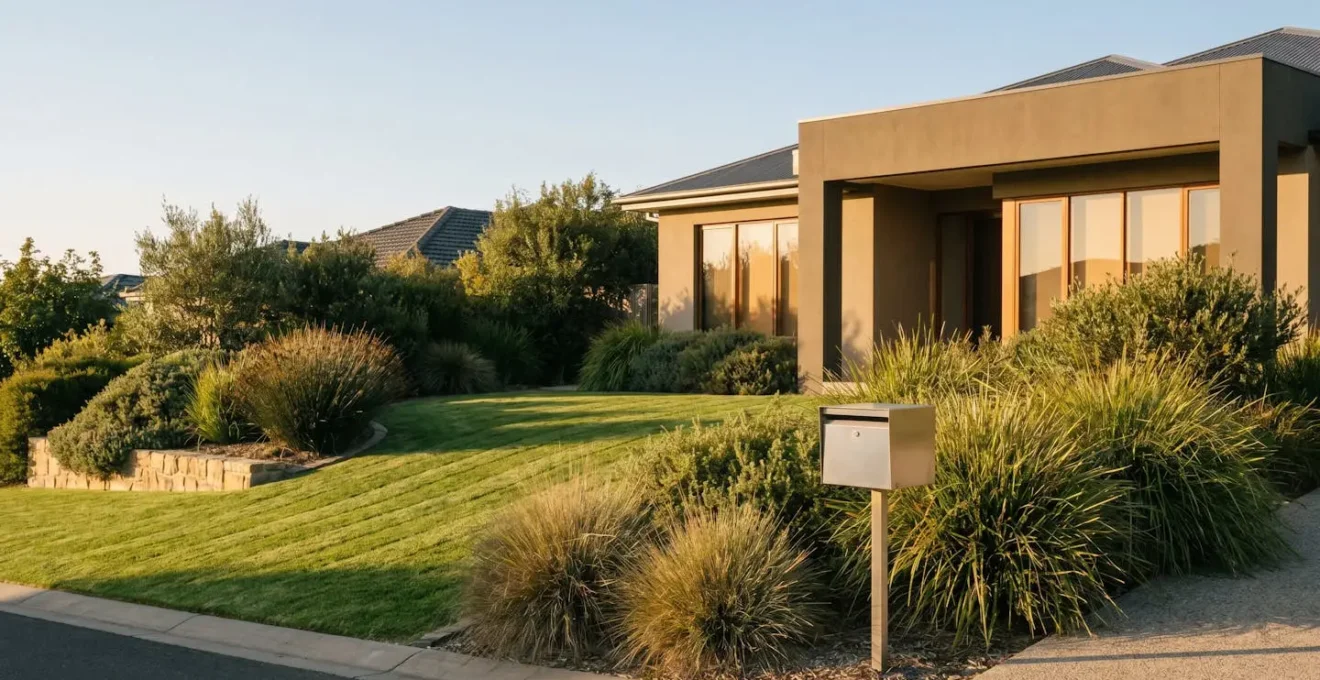
Investing in professional landscaping increases property value not by just adding ‘kerb appeal,’ but by strategically increasing your home’s functional, usable square footage.
- The potential return is significant, with some garden features offering over 100% ROI and basic landscaping potentially adding up to 77% to a property’s value.
- However, success hinges on avoiding ‘negative value assets’ like poor drainage and understanding your street’s ‘price ceiling’ to prevent over-capitalisation.
Recommendation: Treat your garden redesign as a financial decision. Analyse the cost versus the creation of new, functional outdoor living space to justify a higher valuation.
For UK homeowners, the question of whether to invest in professional landscaping is often fraught with anxiety. You know a beautiful garden feels good, but will spending thousands of pounds on patios, plants, and pergolas actually translate into a higher sale price? The financial return on such an aesthetic investment can feel intangible, a gamble on a future buyer’s taste.
Much of the common advice focuses on simple tidiness—mowing the lawn, weeding the flowerbeds, a fresh coat of paint on the fence. This is presentation, not investment. It fails to address the core question: how can you strategically allocate a significant budget to your garden to generate a quantifiable financial return? The key isn’t just to make it ‘prettier’; it’s to fundamentally increase the asset value of your property.
The real shift in perspective comes when you stop thinking about landscaping as decoration and start treating it as a financial instrument. The crucial question isn’t just “what features should I add?” but “how does this investment perform against my street’s price ceiling?” and “how can I transform outdoor space into valuable, usable square footage?” This is the framework of a garden design ROI consultant: value-focused, aesthetically aware, and driven by data.
This analysis provides a clear framework for making those calculated decisions. We will dissect which features offer the most significant appeal, evaluate the long-term costs of popular choices, identify the hidden financial risks, and ultimately, reveal how to know when you are investing wisely versus when you are simply spending money.
Summary: Landscaping ROI: A Cost-Benefit Analysis for Increasing UK Property Value
- Which Garden Features Add the Most Appeal in Suburban UK Homes?
- Artificial Grass or Real Lawn: Which Appeals More to UK Buyers?
- Why Can Poor Garden Drainage Reduce Property Appeal?
- Can Adding a Patio Increase Your Sale Price by £10,000?
- When Is the Best Season to Complete Major Garden Works Before Selling?
- Which £5,000 Upgrade Allows You to Raise Rent by 10%?
- Should You Spend £40,000 Renovating if the Best House Sold for £350,000?
- How Do You Know When a Street Has Reached Its Price Ceiling?
Which Garden Features Add the Most Appeal in Suburban UK Homes?
When evaluating where to invest your landscaping budget, the goal is to identify features that offer a combination of broad buyer appeal and a strong return on investment (ROI). The data is compelling: strategic garden improvements are not just expenses but value-adding capital investments. In fact, some research suggests that well-executed landscaping can increase property value by up to 77%, a figure that rivals or even exceeds major indoor projects like extensions. More conservative estimates still point towards significant gains, with general consensus from estate agents suggesting that a well-designed garden can increase UK property value by up to 20%.
The key is prioritising features that extend the home’s living space and enhance its functionality. Elements that create an ‘outdoor room’—such as patios, pergolas, and dedicated seating areas—are consistently rated highly by buyers. They don’t just see a garden; they see an additional area for dining, entertaining, or relaxing. This perception of increased usable space is what drives a higher valuation.
Other high-impact features include mature trees, which add a sense of establishment and privacy, and well-designed lighting, which makes the garden usable in the evenings and adds a premium feel. Even basic maintenance and well-defined walkways can deliver an ROI exceeding 100% because they create an immediate impression of a well-cared-for, move-in-ready property. The focus should always be on creating a cohesive, inviting, and functional space that a potential buyer can instantly picture themselves using.
Ultimately, the most appealing features are those that solve a problem for the buyer—providing privacy, creating an entertaining space, or offering a low-maintenance lifestyle—while signalling quality and care.
Artificial Grass or Real Lawn: Which Appeals More to UK Buyers?
The choice between artificial grass and a real lawn is a perfect example of a nuanced investment decision. On the surface, artificial turf seems to offer a clear win for the modern, time-poor UK buyer: a perpetually green, low-maintenance lawn. The long-term financial case can also be compelling. While the initial installation cost for artificial grass is significantly higher than for turf, the elimination of annual costs for mowing, watering, and treatments means it can be the more economical choice over a decade.
This is where an investor’s mindset is crucial. You must consider not just the upfront cost but the total cost of ownership and the perception of your target buyer. For a family with young children or pets, the appeal of a mud-free, durable surface might be a major selling point. For others, it can be a significant drawback. As one real estate professional noted, the appeal is not universal.
Artificial grass might seem like a low-maintenance win, but some buyers see it as a negative. It can get hot, doesn’t always look natural up close, and isn’t the most eco-friendly choice.
– Bryan (Real Estate Professional), Redfin Property Guide
This highlights a key investment principle: what one buyer sees as a premium feature, another may see as a future replacement cost. A poorly installed, cheap-looking artificial lawn can become a ‘negative value asset’, actively detracting from the property’s appeal. In contrast, a lush, well-maintained natural lawn can evoke feelings of traditional quality and environmental consciousness.
The decision, therefore, depends entirely on context. In a high-density urban area with small gardens where maintenance is a genuine burden, a high-quality artificial lawn might add a premium. In a leafy suburb known for its traditional gardens, it could be perceived as a detriment. The financially astute homeowner weighs the installation cost, long-term savings, and, most importantly, the likely preference of their property’s target demographic.
Your role is to choose the option that best aligns with the overall value proposition of your home, ensuring it’s seen as an upgrade, not a compromise.
Why Can Poor Garden Drainage Reduce Property Appeal?
If well-planned landscaping is a value-adding asset, then poor garden drainage is its opposite: a significant liability that can actively destroy property value. This issue goes far beyond the simple inconvenience of a waterlogged lawn or a perpetually damp patio. For a potential buyer, and particularly for their surveyor, signs of poor drainage are a major red flag signalling a cascade of potential hidden costs and structural problems. The risk is so significant that unreported drainage issues factored into over 21% of delayed or renegotiated UK property deals.
A buyer’s primary concern is what the surface water is doing to the property’s foundations. Persistent dampness and water accumulation against the house can lead to catastrophic structural issues, turning a simple garden problem into a five-figure repair bill. This is where the financial risk becomes starkly apparent. The presence of mould, mildew, and damp patches inside the home, often a direct result of poor external drainage, are immediate deal-breakers for many.
The impact is twofold. First, it drastically reduces the appeal of the garden itself, rendering it unusable for large parts of the year and limiting its potential as a functional living space. Second, and more critically, it introduces a significant element of risk and uncertainty for the buyer. No one wants to inherit a problem that could lead to foundation movement, cracked walls, or expensive remediation work.
Case Study: Foundation Damage from Poor Drainage
Poor drainage causing water accumulation around foundations leads to soil erosion and shifting. Over time, this erosion causes foundations to move, crack, or sink, destabilizing the entire home. Repair costs can easily run into tens of thousands of pounds. Foundation issues cascade into other structural problems including cracked walls, uneven floors, and sticking doors. Mold and mildew growth in basements creates health hazards and requires expensive remediation services, significantly deterring potential buyers and lowering property value.
Therefore, investing in a proper drainage solution—such as French drains or a professionally graded lawn—is not an optional upgrade; it’s an essential act of asset protection that underpins the value of your entire property.
Can Adding a Patio Increase Your Sale Price by £10,000?
The question of whether a patio can add a specific monetary value like £10,000 is a classic ROI calculation. The answer is not in the patio itself, but in what it creates: valuable, usable living space. A simple slab of paving in the middle of a garden adds minimal value. However, a well-designed patio that seamlessly connects the indoor living area with the outdoors, effectively creating a new ‘room’, can absolutely justify a significant price premium.
Think of it in terms of price per square foot. If you create a 20-square-metre outdoor living room that is sheltered, well-lit, and beautifully integrated with the house, you have functionally increased the desirable footprint of the property. Buyers are not just paying for paving stones; they are paying for an alfresco dining area, a space for summer entertaining, a safe play zone for children. This perceived increase in living space is what unlocks the value. A £1,700-£3,000 investment in a quality patio could easily yield an ROI of 100% or more if it transforms an overlooked patch of garden into the home’s most desirable feature.
To achieve a £10,000 uplift, the patio must be positioned as a premium feature. This means considering several factors:
- Materials: High-quality materials like natural stone (e.g., slate, limestone) have a higher perceived value than basic concrete pavers.
- Integration: The patio should feel like a natural extension of the home, with similar levels and easy access, for example, through bifold or sliding doors.
- Functionality: Incorporating features like built-in seating, outdoor lighting, a power supply, or a covering like a pergola elevates it from a simple patio to a true outdoor living room.
- Scale: The size must be proportionate to the house and garden. A tiny, unusable patio adds little value, while one that dominates the entire garden can be a negative.
Therefore, yes, a patio can increase your sale price by £10,000 or more, but only if the investment is strategic. It must be conceived and executed not as a piece of hardscaping, but as the foundation of a valuable new living area for the home.
When Is the Best Season to Complete Major Garden Works Before Selling?
Timing your garden renovation is as crucial as the work itself. The goal is to present a mature, established, and beautiful garden at the exact moment buyer interest is at its peak. This requires ‘ROI-Driven Sequencing’—a strategic timeline that works backwards from your desired sale date and optimises for cost, growth, and visual impact. The appeal of a great garden intensifies during summer, and research reveals that 39% of buyers would be more likely to pay above the asking price for a property with a desirable garden when viewing in sunny weather.
The most common mistake is undertaking a major landscaping project just weeks before listing. A freshly landscaped garden often looks sparse and unsettled. The soil is disturbed, young plants look diminutive, and new turf can show seams. This screams “last-minute effort” to savvy buyers and their surveyors. A truly valuable garden feels established and integrated. This means major planting of trees, shrubs, and perennials should ideally be completed a full 12 months before going to market. This allows them to mature, fill out, and look like a natural, intentional part of the landscape.
Conversely, the best time to schedule major ‘hardscaping’ work—such as building patios, walls, or installing drainage—is during the contractors’ off-season in late autumn or winter. Demand is lower, meaning you are more likely to secure experienced crews at more competitive rates. This allows you to complete the disruptive, structural work well in advance, leaving the spring and early summer for the planting and finishing touches to mature right on cue for a peak-season sale.
Action Plan: Strategic Timeline for Garden Preparation
- One Year in Advance (or previous Autumn): Complete major planting of trees, shrubs and hedges. Schedule and complete major hardscaping work (patios, drainage, walls) to take advantage of off-season contractor rates. Plant bulbs for spring colour.
- Spring before Summer Sale: Focus on lawn care – scarifying, aerating, and feeding. Install long-blooming perennials that will peak during the main viewing season.
- 1-2 Months Before Listing: Undertake a full garden ‘detail’. This includes pressure washing patios, painting fences, deep cleaning, and adding fresh mulch to beds. This is the ‘staging’ phase.
- During Viewings (Peak Season): Ensure the garden is at its best. Add finishing touches like potted plants for colour, ensure the lawn is mowed, and dress outdoor furniture to showcase the lifestyle potential.
- Analyse Buyer Data: Remember that 64% of buyers are more likely to book a viewing of homes with great outdoor space during summer, and 61% are more likely to submit offers. Your timing is designed to capture this peak demand.
This long-term approach transforms your garden from a rushed afterthought into a meticulously prepared asset, ready to command the highest possible price.
Which £5,000 Upgrade Allows You to Raise Rent by 10%?
In the competitive rental market, a 10% uplift in rent from a single £5,000 investment requires an upgrade that adds significant, undeniable utility for a tenant. While indoor improvements like a new bathroom or kitchen are options, one of the most compelling and increasingly popular choices is the addition of a dedicated outdoor office or garden room. In the post-pandemic world of hybrid and remote working, a separate, quiet workspace is no longer a luxury but a critical amenity for many professional tenants.
A modest, high-quality garden room or a well-constructed covered pergola with power and lighting can be achieved within or close to a £5,000 budget. This investment fundamentally changes the property’s offering. It effectively adds an extra, highly functional room to the property without the cost and disruption of a full extension. For a tenant paying rent, this is a tangible benefit they can use every day. It provides the crucial separation between home and work life that is difficult to achieve in a typical house or flat.
This strategy taps directly into what estate agents are seeing in the sales market, where the value-add is clear. According to property experts, garden rooms add between 5-15% to a UK property’s value. While the rental yield calculation is different, the underlying principle is the same: you are adding a high-demand feature. A landlord can justify a higher rent because they are offering a solution to a tenant’s major lifestyle need. A 10% rental increase on a £1,500/month property is £150/month, or £1,800/year. The £5,000 investment could pay for itself in under three years while simultaneously increasing the capital value of the property.
Compared to purely aesthetic upgrades, the garden office offers a clear, calculable return on investment, making it a powerful tool for landlords looking to maximise their yield.
Should You Spend £40,000 Renovating if the Best House Sold for £350,000?
This question cuts to the heart of investment strategy: the risk of over-capitalisation. Spending £40,000 on a property in a street where the highest recorded sale is £350,000 is an extremely high-risk endeavour. You are betting that your property can single-handedly smash the street’s perceived ‘price ceiling’. While general studies have found the average renovation adds about 9% to a home’s value, this is an average. When you approach the top end of a local market, the returns diminish sharply.
If your house is currently valued at, say, £300,000, spending £40,000 on renovations would mean you need to sell it for at least £340,000 just to break even on your outlay. To make a profit, you’d need to achieve a sale price well above the street’s previous record of £350,000. This is highly unlikely. Valuers and mortgage lenders look at ‘comparables’—recent sales of similar properties in the immediate vicinity. If your property is an outlier, it will be difficult to get it valued at your target price, and a buyer will struggle to secure a mortgage for that amount.
A more financially prudent approach is to work within established budgeting rules. As a guideline for landscaping specifically, experts often suggest a proportional investment. This ensures the upgrade is in harmony with the property’s overall value.
Apex advises its clients to allocate 10% of the home’s value to landscaping for the best results. It is essential to consider your home’s architectural style and select landscaping features that harmonize with it.
– Apex Landscaping, Landscaping ROI Guide
For a £300,000 house, this suggests a landscaping budget of around £30,000 would be the absolute maximum to consider, and even that should be approached with caution. A £40,000 spend on a £350,000 property is over 11% of its *future* value, a clear sign of over-capitalisation.
In this scenario, a more modest, targeted renovation focusing on high-ROI improvements would be a far safer and more profitable strategy than a large, speculative overhaul.
Key Takeaways
- Think like an investor: Your garden is a financial asset. Every pound spent must be justified by a potential return in either capital value or rental yield.
- Value is in utility: The biggest returns come from transforming outdoor space into functional ‘usable square footage’—an outdoor living room, a dining area, or a home office.
- Know your ceiling: Understand the ‘price ceiling’ of your street. Over-capitalising on a property that cannot achieve a higher price is the fastest way to lose money.
How Do You Know When a Street Has Reached Its Price Ceiling?
Identifying a street’s price ceiling is a critical exercise in market analysis for any savvy homeowner. You can determine this ceiling by researching the sold prices of the most expensive, recently renovated properties on your street and those immediately surrounding it. Property portals like Rightmove and Zoopla provide historical sales data that is invaluable for this task. When you see a clear pattern where even the best-presented homes do not sell above a certain price point, you have likely found the ceiling. This ceiling is dictated by the area’s overall desirability, school catchments, transport links, and the general size and type of housing stock.
Attempting to simply smash through this ceiling with a standard renovation is often futile. However, landscaping offers a unique strategic tool to challenge it. While in premium markets a thoughtful landscape investment might see an uplift of £150,000-£300,000 on a high-value property, the principle applies at all levels. The strategy is not to make the house bigger, but to make the *usable property* bigger.
This is where the concept of creating functional outdoor living space becomes a powerful financial argument. By creating a high-end, all-weather ‘outdoor living room’, you are fundamentally changing the property’s specifications and challenging the basis of comparison with your neighbours.
Strategy: Using Outdoor ‘Square Footage’ to Break the Ceiling
While overall house prices may have a ceiling, the price per square foot for usable space does not. A high-end landscaping project that creates a functional ‘outdoor living room’ effectively increases the usable square footage of the property. By benchmarking against the cost of an equivalent indoor extension, homeowners can justify a higher total price. This strategy works particularly well in areas where indoor extensions are restricted by planning permission, making outdoor improvements the only viable way to add functional living space and break through the street’s traditional price ceiling.
By investing in your garden with this clear, value-driven strategy, you are not just hoping for a return; you are building a logical case for a higher valuation, turning your outdoor space into your property’s most powerful financial asset.