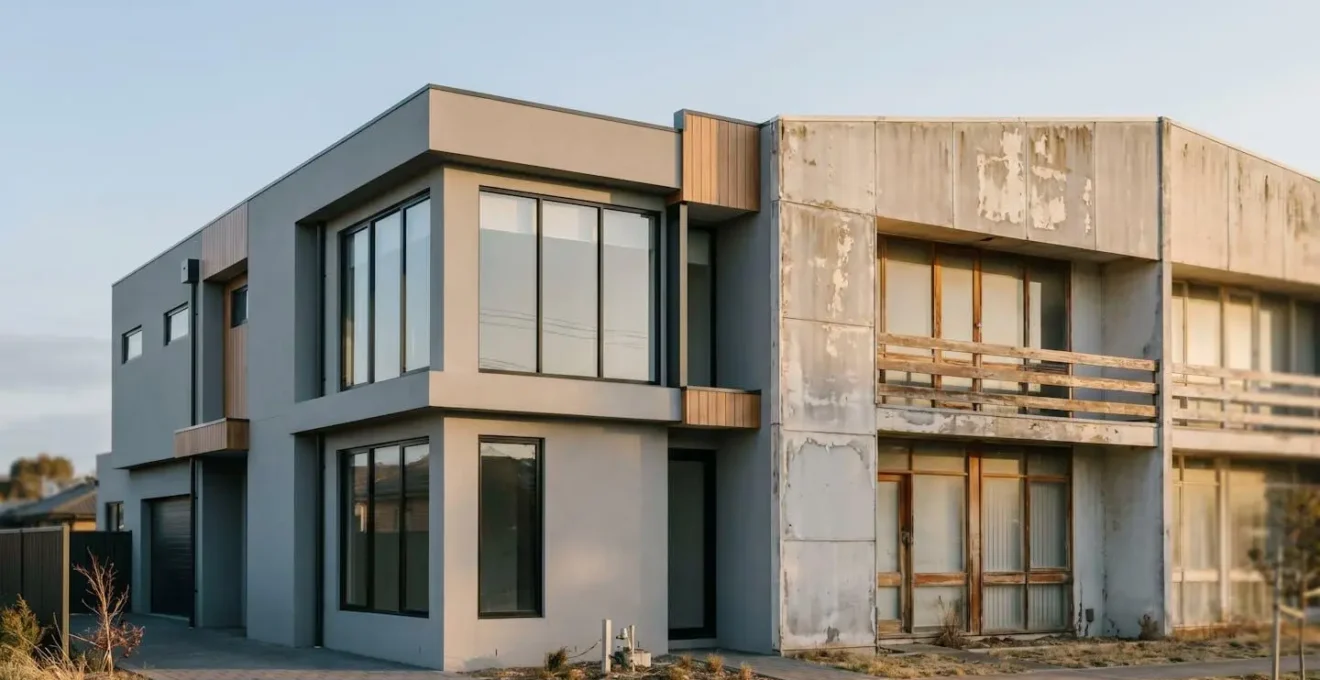
High-ROI facade upgrades are not about aesthetics; they are a calculated investment in valuation arbitrage, where perceived value significantly outweighs the initial cost.
- Facade-focused upgrades like manufactured stone veneer can yield a significantly higher ROI (over 150%) compared to standard upgrades like windows (around 70%).
- Cheap materials are a false economy, actively destroying value by signalling poor maintenance and future liabilities to surveyors and buyers.
Recommendation: Focus on the total lifecycle cost and documented appraisal impact of materials, not just the initial installation price, to maximise your asset’s financial performance.
For UK property owners, deploying capital for maximum return is a constant challenge. While interior upgrades like kitchens and bathrooms are the default consideration for adding value, they often overlook the single largest and most visible component of the asset: the building envelope. The facade is more than just a weather shield or a matter of curb appeal; it is a primary financial signal to valuers, tenants, and future purchasers.
The standard advice to “improve curb appeal” is insufficient. It lacks the structural and financial rigour required for strategic asset management. This analysis reframes the conversation entirely. We will dissect exterior facade improvements not as a cosmetic expense, but as a critical capital investment with a measurable Return on Investment (ROI). The key is to understand the difference between spending money and investing in features that directly influence valuation metrics, attract higher-quality tenants, and reduce long-term lifecycle costs.
This article provides a specialist framework for this decision. By examining the data behind different upgrades, understanding the constraints of planning, and analysing the signals your facade sends to the market, you can move beyond guesswork and make calculated decisions that deliver the highest possible return on your property.
Summary: A Structural Approach to Exterior Facade ROI
- New Windows or New Render: Which Adds More Value to Your Home?
- Can You Change Your Facade if You Live in a Conservation Area?
- Why Does Cheap Cladding Scare Off Potential Buyers?
- Can Modernising Your Shopfront Increase Tenant Demand?
- Should You Upgrade the Facade Before Refinancing Your Property?
- Loft Insulation or New Boiler: Which Cuts Bills More in a 3-Bed House?
- The Weak Covenant Warning Sign 80% of Retail Investors Ignore
- Which Energy Upgrades Deliver the Fastest Payback in a UK Property?
New Windows or New Render: Which Adds More Value to Your Home?
The decision between replacing windows and applying new render is a classic dilemma for property owners. Both can refresh a tired exterior, but their impact on valuation is not equal. While modern, energy-efficient windows offer a clear benefit in utility savings and comfort, their ROI is often capped. In contrast, a high-quality facade refinish, such as with manufactured stone veneer, can generate a far greater return through a powerful effect known as valuation arbitrage.
This is where the perceived value added is significantly higher than the cost. Data consistently shows that high-impact visual upgrades create a stronger first impression on valuers and potential buyers. For example, a recent industry report found that while energy-efficient window replacements offer a respectable return, the ROI for manufactured stone veneer can be substantially higher. An analysis from the 2024 Cost vs. Value Report highlights a 153% ROI for manufactured stone veneer facade upgrades vs. 65-75% ROI for window replacements.
This disparity occurs because a dramatic facade transformation signals a higher level of investment and quality, fundamentally altering the character and market position of the property. This aligns with broader market trends. Research shows that a vast majority of homeowners—84% according to one study—are now renovating specifically to increase property value. Therefore, while new windows are a sensible upgrade, a strategic facade overhaul often represents the superior investment for maximising capital return.
Can You Change Your Facade if You Live in a Conservation Area?
Owning a property in a UK Conservation Area presents a unique duality: it is both a significant constraint and a powerful value driver. Facade alterations in these zones are heavily restricted to preserve the area’s special architectural or historic character. However, these restrictions are precisely what underpins the area’s appeal and financial premium. Indeed, research by the London School of Economics and Historic England has found that properties within these designated zones typically command higher prices and appreciate more rapidly.
Any proposed change, from window replacement to rendering, requires meticulous planning and will likely need Planning Permission. The primary consideration for local authorities is whether the change preserves or enhances the character of the area. Using inappropriate materials or designs is the fastest route to a refusal. As leading planning consultants explain, the clash with existing character is a primary reason for rejection.
Planning permission is often refused when a proposed design clashes with the existing building’s character. Replacing period window frames with uPVC, altering facades, or modifying rooflines can disrupt the visual harmony and historic integrity of a property.
– Christopher David Planning Consultants, Conservation Area Planning Restrictions Guide
The key is to work with the constraints, not against them. This involves specifying heritage-grade materials—such as traditional timber for windows or lime-based render—that meet modern performance standards. While more expensive initially, this approach protects the asset’s value and ensures compliance, making it a necessary investment rather than a cost.
Why Does Cheap Cladding Scare Off Potential Buyers?
From a structural investment perspective, the choice of cladding material is a clear indicator of an owner’s long-term strategy. Opting for the cheapest available option is a critical mistake that savvy buyers, and more importantly their surveyors, will immediately identify as a red flag. Cheap cladding signals a focus on short-term cosmetic fixes over long-term asset integrity, suggesting that other, less visible, maintenance issues may also have been ignored.
The core principle at play is lifecycle costing, which evaluates the total cost of an asset over its entire lifespan, including maintenance, repairs, and replacement. A low initial price for materials like basic vinyl cladding is often offset by a short lifespan, susceptibility to fading and damage, and ultimately, a negative impact on valuation. It becomes a value-destroying feature. In contrast, premium materials like fiber cement or well-maintained timber, while more expensive upfront, preserve and even enhance value over decades.
The following table breaks down the true cost versus value signal of common cladding materials, demonstrating how the initial price is only a small part of the financial equation.
| Cladding Material | Initial Cost (per sq. ft.) | Lifespan | Maintenance Cycle | Long-term Value Signal |
|---|---|---|---|---|
| Vinyl (Budget) | $2.50 – $10.75 | 10-20 years | Minimal but prone to fading | Value-Destroying |
| Aluminum (Mid-range) | $5.50 – $10.50 | 40+ years | Repaint every 10-15 years | Cost-Effective |
| Fiber Cement (Premium) | $5.00 – $18.00 | 50+ years | Color lasts 15+ years | Value-Preserving |
| Timber (High-end) | $5.00 – $21.00 | Variable with treatment | Sealing/staining required | Premium (if maintained) |
Ultimately, quality cladding acts as a capital shield for the building. It protects the underlying structure, reduces maintenance liabilities, and sends a powerful signal of quality to the market. Choosing a cheap alternative is an explicit declaration that long-term value is not a priority, a message that potential buyers will hear loud and clear.
Can Modernising Your Shopfront Increase Tenant Demand?
In the commercial property sector, the facade is not merely an architectural feature; it is a primary business development tool. For retail and office spaces, a modern, well-maintained shopfront directly translates into increased tenant demand, lower vacancy rates, and the ability to command premium rents. The exterior is the first and most critical element of a tenant’s own branding and customer acquisition strategy. A landlord who provides a high-quality facade is, in effect, providing a platform for the tenant’s success.
The financial impact is well-documented. Data shows that modern, well-maintained commercial properties achieve 15% to 25% higher occupancy rates and rental premiums compared to their neglected counterparts. This is because the facade’s design can be tailored to the ideal tenant’s business model. For example, a high-footfall retailer requires maximum glazing and an open, inviting entrance, while a private wealth advisor may desire a more discreet, upscale, and secure-looking frontage. A landlord who can provide this tailored solution is in a powerful negotiating position.
Case Study: The Tenant-Facade Alignment Principle
AEI Consultants’ commercial property analysis demonstrates that retail spaces with attractive storefronts, clean windows, and well-maintained facades typically draw significantly more foot traffic than spaces with neglected facades. The research emphasizes that the visual appeal of a shopfront directly enables tenant business success. Properties that align facade design with tenant business models, such as offering maximum glazing for a high-footfall retailer or a discreet entrance for a private wealth advisor, can justify higher rent premiums and attract stronger tenant covenants.
By investing in a modern shopfront, a property owner is not just improving a building; they are creating a more desirable business location. This attracts a higher calibre of tenant with a stronger covenant, reducing risk and creating a more stable, profitable asset over the long term.
Should You Upgrade the Facade Before Refinancing Your Property?
Upgrading a property’s facade immediately before a refinancing or valuation event is a highly effective strategy for maximising net asset value. This is a clear-cut case of valuation arbitrage, where a well-chosen investment can generate a perceived value in the eyes of an appraiser that far exceeds its cost. Appraisers are heavily influenced by a property’s physical condition and curb appeal, as these are direct indicators of maintenance, quality, and market desirability. A tired, dated facade can subconsciously lead to a more conservative valuation across the board.
Even seemingly minor exterior upgrades can have an outsized impact. For instance, while often overlooked, the garage door is a significant component of a residential facade. Industry data on appraisal value improvements shows that a new garage door can deliver a spectacular return, with some reports showing a 194% ROI on garage door replacement. This demonstrates the power of targeted, high-visibility improvements to influence an appraiser’s final figure.
To ensure this uplift is captured, however, the process must be documented with the same rigour as a legal proceeding. Providing an appraiser with a professionally compiled dossier of the works undertaken—including material specifications, warranties, and projected energy savings—transforms the upgrade from a “lick of paint” into a documented capital improvement, forcing them to justify a higher valuation. The key is to make their job easier by providing indisputable evidence of added value.
Your Action Plan: Documenting Facade Upgrades for Maximum Appraisal Value
- Material Specifications: Document all material specifications with manufacturer certifications proving premium-grade materials that exceed standard building codes.
- Comprehensive Warranties: Obtain comprehensive warranties (minimum 20-year for materials, 10-year for workmanship) to demonstrate long-term asset protection.
- Energy Savings: Calculate and document projected energy savings with before-and-after thermal imaging or official energy performance certificate (EPC) projections.
- Comparable Properties: Compile “comps” of properties in the area that feature similar high-quality facade finishes and their recent sale or valuation prices.
- Valuation Impact Report: Create a professional report combining invoices, technical specifications, energy certifications, and your comp analysis to present to the appraiser.
Loft Insulation or New Boiler: Which Cuts Bills More in a 3-Bed House?
When considering energy efficiency, property owners often focus on mechanical systems like boilers. However, from a pure ROI perspective, the building fabric should always be the priority. A new, efficient boiler heating a poorly insulated house is like pouring water into a leaky bucket. The principle is simple: ‘fabric first’. Reducing heat loss through insulation is fundamentally more efficient and cost-effective than generating more heat to compensate for that loss.
For a typical 3-bed house in the UK, a significant amount of heat is lost through the roof. Upgrading loft insulation is one of the quickest, cheapest, and most effective energy-saving measures available. The payback period is remarkably short, often just a few years, and the return on investment can be substantial. For example, some analyses show that energy-efficient improvements can provide up to a 116% ROI for attic insulation upgrades alone.
While a new boiler is a necessary long-term replacement, its primary benefit is restoring function. An insulation upgrade, by contrast, is a proactive investment in performance. It not only cuts bills significantly but also improves the property’s Energy Performance Certificate (EPC) rating, a metric of growing importance to both buyers and tenants.
Energy-efficient upgrades are increasingly important to today’s eco-conscious buyers. Not only do they lower utility bills, but they also make your home more attractive on the market.
– Property Collective Investment Advisors, Best ROI Home Improvements Analysis
Therefore, while both are valuable, loft insulation almost always offers a faster payback and a clearer financial return than a new boiler. It directly addresses the root cause of high energy bills—heat loss—making it the superior initial investment for any property owner focused on efficiency and ROI.
The Weak Covenant Warning Sign 80% of Retail Investors Ignore
In commercial property investment, the strength of the tenant covenant—their financial stability and ability to meet rental obligations—is paramount. Investors rightly spend significant resources on due diligence, analysing company accounts and market position. However, a shockingly high number of investors ignore a powerful, visible proxy for this risk: the physical condition of the building’s facade.
A neglected exterior, characterized by peeling paint, dirty windows, or dated cladding, is more than an aesthetic issue. It is a clear signal of an ownership and management strategy that prioritizes short-term cash extraction over long-term asset health. This approach invariably correlates with deferred maintenance across all building systems, from HVAC to roofing. For an incoming investor, a poor facade is a warning sign of a cascade of future capital expenditure requirements.
Case Study: The Facade as a Due Diligence Metric
Strategic property management analysis demonstrates that a property’s physical appearance serves as a powerful indicator of overall asset health and ownership commitment. Properties with well-maintained facades signal professional management and attract high-quality tenants willing to pay premium rents. Conversely, neglected exteriors are strongly correlated with deferred maintenance across all building systems. Investment advisors emphasize that facade condition is a critical metric in commercial property due diligence that directly parallels the covenant strength found in lease agreements, as it impacts tenant satisfaction, retention rates, and rental income.
A well-maintained facade does the opposite. It signals a proactive, professional landlord committed to the asset. This attracts higher-quality tenants who are themselves invested in their business image and are more likely to have a strong covenant. Therefore, when evaluating a potential investment, the facade should be read as a financial statement. A pristine exterior suggests a strong balance sheet and a reliable income stream. A deteriorating one is a flashing red light, warning of hidden liabilities and a potentially weak covenant that no lease agreement can fully mitigate.
Key takeaways
- Focus on high-impact visual upgrades like manufactured veneer or insulated garage doors for maximum valuation arbitrage and ROI that can exceed 150%.
- Cheap materials actively destroy long-term value; prioritise lifecycle costing over initial price to avoid signalling poor maintenance to surveyors and buyers.
- For commercial properties, the facade is a business tool that attracts premium tenants and can increase occupancy rates by up to 25%.
Which Energy Upgrades Deliver the Fastest Payback in a UK Property?
Ultimately, a property owner’s decision on which upgrade to pursue must balance three competing factors: the speed of payback through energy savings, the immediate impact on valuation, and the visibility of the improvement to tenants or buyers. There is no single “best” upgrade; the optimal choice depends on the owner’s strategic goal, whether it’s long-term hold for rental income or short-term preparation for sale or refinancing.
Invisible upgrades like attic insulation offer the fastest payback period, often recouping their cost in just 2-4 years through reduced utility bills. However, their impact on valuation is less direct as they are not immediately visible. At the other end of the spectrum, high-impact facade upgrades like manufactured stone veneer offer a massive valuation uplift but have a longer payback period in terms of energy savings. In between, upgrades like energy-efficient windows and insulated garage doors offer a blend of both benefits.
The following matrix synthesizes these trade-offs, providing a clear framework for decision-making. It highlights a critical, often-overlooked metric: Tenant Visibility. For rental properties, highly visible upgrades that improve comfort and aesthetics (like new windows) can be more valuable for tenant retention than invisible ones (like attic insulation), even if the payback period is longer.
| Energy Upgrade Type | Average Cost | Payback Period | Valuation Impact | Tenant Visibility |
|---|---|---|---|---|
| Manufactured Stone Veneer (Facade) | $11,287 | Medium (5-8 years) | High (153% ROI) | Very High – Daily visual/tactile |
| Energy-Efficient Windows | Variable | Medium (7-12 years) | Medium (65-75% ROI) | High – Visible comfort benefit |
| Insulated Garage Door | $4,513 | Short (3-5 years) | Very High (194% ROI) | High – Curb appeal impact |
| Attic Insulation | Variable | Very Short (2-4 years) | High (116% ROI) | Low – Invisible upgrade |
| New Boiler System | High | Medium (6-10 years) | Low – Moderate | Low – Only noticed when working |
To apply these principles effectively, the next logical step is to commission a detailed building envelope audit to identify the highest-ROI opportunities for your specific asset.