Renovation & Enhancement
Property enhancement sits at the intersection of asset management and value creation. Whether you own a residential property, manage a commercial portfolio, or invest in property development, the fundamental question remains constant: which improvements deliver measurable returns, and which simply consume capital without moving the valuation needle? Understanding this distinction transforms renovation from a cost centre into a strategic financial lever.
The challenge lies not in identifying improvements that could add value, but in calculating which upgrades generate returns that exceed their capital outlay and financing costs. A £30,000 kitchen might impress viewers, but if it only adds £20,000 to the sale price, you have effectively destroyed £10,000 in equity. This article examines the financial architecture behind property enhancement, exploring how to evaluate returns, time interventions strategically, and avoid the common pitfalls that erode rather than build wealth.
From energy efficiency upgrades that deliver ongoing operational savings to curb appeal improvements that compress time-on-market, we will dissect the mechanisms through which different renovation categories impact property value and investment returns.
Understanding the Financial Foundation of Property Enhancement
The core principle governing any renovation decision is simple: does the improvement generate a return greater than its all-in cost? This calculation becomes more nuanced when you factor in financing costs. If you are using a home equity loan at 6% interest to fund a loft conversion, that upgrade needs to deliver returns exceeding both the construction cost and the cumulative interest payments over the loan term.
Think of property enhancement as a form of arbitrage. You are investing capital today in exchange for either immediate income uplift (higher rent), faster transaction velocity (reduced time-on-market), or enhanced sale price. The arithmetic differs across property types and market conditions, but the framework remains consistent.
Calculating True Return on Investment
A meaningful ROI calculation must account for three variables: direct costs (materials and labour), financing costs (interest if borrowing), and opportunity cost (alternative uses for that capital). A bathroom refresh costing £5,000 that enables a £100 monthly rent increase delivers a 24% annual return before financing costs—compelling by most investment standards. However, if that same improvement only marginally increases sale price in a market where buyers expect modern bathrooms as standard, the return profile weakens considerably.
The Equity Loan Test
When using borrowed funds, apply this threshold test: if your home equity loan charges 5.5% annually, any renovation must deliver returns exceeding this rate to justify the debt. Energy upgrades that reduce bills by £800 annually on a £10,000 investment clear this hurdle easily (8% return). Conversely, purely aesthetic upgrades with uncertain valuation impact may fail this test entirely.
Energy Efficiency Upgrades: Where Performance Meets Profit
Energy improvements occupy a unique position in the renovation hierarchy because they generate dual returns: immediate operational cost reduction and enhanced market appeal. The payback calculation is more transparent than aesthetic upgrades because energy savings are quantifiable and recurring.
Insulation Versus Heating System Replacement
The perennial question facing homeowners is whether to prioritise loft insulation or boiler replacement. The answer hinges on your property’s current inefficiency. In a poorly insulated three-bedroom house, adding 270mm of loft insulation typically costs £300-£500 and can reduce heating bills by 15-20% annually. A new A-rated condensing boiler costs £2,500-£3,500 but may only improve efficiency by 10-15% if the existing boiler is already relatively modern.
The mathematical advantage often favours insulation because the capital outlay is substantially lower for comparable percentage savings. However, a failing boiler forces the decision—at which point, sequencing both improvements delivers compounding benefits.
Smart Thermostat Economics
Smart thermostats represent the low-capital-intensity end of energy upgrades, typically costing £200-£300 installed. The claimed savings of 10-15% on heating bills translate to £150-£200 annually for an average household, delivering payback within 18-24 months. The critical variable is installation quality—incorrect zoning configuration or poor sensor placement can eliminate the efficiency gains entirely.
Compatibility with older heating systems is frequently overlooked. Many smart thermostats require a common wire (C-wire) that older boiler systems lack, necessitating additional wiring work that can double installation costs. Verify compatibility before purchase to avoid discovering limitations mid-installation.
Solar Panel Return Profiles
Solar installations present a more complex financial picture. A typical 4kW domestic system costs £20,000-£25,000, generates annual electricity savings of £600-£900, and may provide export payments of £100-£200 under current tariff structures. Simple payback extends to 20-25 years—longer than many ownership periods. The critical question becomes whether buyers will capitalise these future savings into the purchase price, and evidence suggests they rarely do so at full value.
Interior Renovations That Move the Valuation Needle
Kitchens and bathrooms dominate interior renovation spending, yet their value contribution varies dramatically based on existing condition, market expectations, and design longevity.
Kitchen Renovation Value Capture
The £30,000 question in kitchen design is whether a luxury installation adds equivalent value. Market evidence suggests diminishing returns beyond mid-range quality. Replacing a dated kitchen with a contemporary mid-specification design captures perhaps 70-90% of cost in added value. Upgrading from mid-range to ultra-premium typically captures only 30-50% of the incremental spend.
The mechanism behind this is buyer psychology: a modern, functional kitchen removes a barrier to purchase and prevents downward price negotiation. An exceptional kitchen rarely commands a proportional premium because buyers are paying for the property’s location, size, and structure—the kitchen is expected to be acceptable, not spectacular.
The Trend Trap in Kitchen Design
Highly trendy design choices—industrial copper fixtures, bold geometric tiles, ultra-minimalist handleless units—age rapidly as design trends shift. Buyers viewing a property five years after installation may perceive these choices as dated rather than premium, actually suppressing value. Neutral palettes, classic materials, and timeless layouts maintain appeal across market cycles.
Bathroom Enhancement Economics
Bathrooms follow similar logic but with lower absolute cost thresholds. A £5,000 bathroom refresh in a rental property that enables a £100 monthly rent increase delivers attractive returns. The same £5,000 spent on an owner-occupied home may add £3,000-£4,000 in sale value—acceptable cost recovery, though not value creation. The key determinant is whether the existing condition is actively deterring buyers or tenants.
Exterior Improvements and First Impressions
Curb appeal operates through a different mechanism than interior upgrades: it does not necessarily add quantifiable value, but it compresses transaction time and increases the probability of receiving asking price or above.
The Psychology of First Impressions
Property viewings are won or lost in the first 30 seconds. A well-maintained exterior signals that the property has been cared for, creating a halo effect that influences perception of the entire home. Conversely, peeling paint, overgrown landscaping, or a cracked driveway triggers suspicion about deferred maintenance throughout.
The financial impact appears in time-on-market statistics. Properties with strong curb appeal typically sell 20-30% faster than comparable homes with neglected exteriors, reducing carrying costs (mortgage interest, utilities, council tax) and opportunity cost.
High-Impact, Low-Cost Exterior Upgrades
Certain exterior improvements deliver disproportionate visual impact relative to cost:
- Front door repainting (£200-£400): Instant refresh that signals attention to detail
- Power washing paths and drives (£150-£300): Removes years of accumulated grime
- Hedge trimming and border definition (£300-£500): Creates structure and tidiness
- Window cleaning and frame painting (£400-£600): Sharpens the property’s appearance
These interventions rarely add measurable value in an appraisal, but they remove friction from the selling process.
Driveway Versus Garden Investment
When capital is limited, should you resurface the driveway or invest in landscaping? The answer depends on existing condition. A damaged driveway actively deters buyers and invites low offers because it represents an immediate post-purchase expense. A tired garden is less penalising because buyers perceive it as optional and improvable over time. Prioritise fixing defects before pursuing enhancements.
The Personalisation Penalty
Highly personalised gardens—elaborate water features, niche plant collections, bespoke sculptures—narrow your buyer pool. Most purchasers want a blank canvas they can adapt to their preferences. Extreme personalisation forces buyers to mentally subtract the cost of removal and restoration, effectively reducing perceived value. Aim for attractive neutrality rather than distinctive character.
Facade Improvements and Structural Perception
The building envelope communicates structural quality and maintenance standards. Facade improvements carry particular weight because they signal whether the property has been protected from weather and decay.
Windows Versus Render: Competing Priorities
When both need attention, windows typically take priority. New double or triple-glazed windows deliver tangible energy savings, noise reduction, and security improvements—all quantifiable benefits. Fresh render improves aesthetics but offers minimal functional advantage unless the existing render is failing and allowing water penetration.
However, if render failure is creating damp issues, it becomes the urgent priority because unaddressed water ingress compounds into expensive structural repairs. The decision framework is: functional problems first, aesthetic improvements second.
The Cladding Credibility Crisis
Low-quality external cladding, particularly types associated with fire safety concerns, actively repels buyers and can make properties unmortgageable. Even when fire-safety compliant, cheap cladding systems signal cost-cutting during construction and raise questions about other hidden compromises. If you are considering cladding, specify systems with established safety records and quality reputations—this is not an area for budget optimisation.
Commercial Property Repositioning Strategies
Commercial property enhancement follows different mathematics than residential because the value is directly tied to income generation. An upgrade that enables higher rent or attracts longer lease terms creates immediate, measurable value through capitalisation rate compression.
Office Upgrades for ESG-Conscious Tenants
Modern corporate tenants increasingly demand sustainability credentials—BREEAM ratings, EPC Band B or above, electric vehicle charging, bike storage, and smart building systems. Upgrading a 1990s office building to meet these expectations requires capital investment of £150-£250 per square metre but can command rental premiums of 15-25% while dramatically reducing void periods.
The ROI calculation is straightforward: if a £200,000 upgrade on a 5,000 square foot building enables a £3 per square foot annual rent increase, you have added £15,000 in annual income. Capitalised at a 6% yield, that is £250,000 in added value—a 25% return on capital.
Mixed-Use Conversion Strategies
Converting ground-floor retail with upper-floor residential creates diversified income streams and can unlock value in changing high streets. Planning permission is the critical gateway, but where obtainable, the value creation can be substantial. Retail units struggling to achieve £25,000 annually might convert to one retail unit at £18,000 plus two flats at £12,000 each—increasing total income by 68%.
Timing Refurbishment to Minimise Void Periods
The costliest element of commercial refurbishment is often the lost rent during works. Strategic timing—refurbishing during natural lease breaks, or scheduling works during lower-demand periods—can reduce this penalty. Six months of void on a property generating £60,000 annually costs £30,000 in lost income, potentially doubling the true cost of a £30,000 refurbishment programme.
Timing, Sequencing and Avoiding Value Destruction
Knowing what to renovate is only half the equation—knowing when and in what order determines whether you capture or destroy value.
Reading Local Market Preferences
Renovation decisions must align with local buyer expectations. In urban areas with young professionals, modern kitchens and integrated appliances are non-negotiable. In rural family markets, garden size and garage space dominate. Installing a £40,000 kitchen in an area where buyers prioritise plot size and parking creates misallocated capital. Research recent comparable sales and speak with local estate agents to understand which features command premiums in your specific micromarket.
Budget Sequencing for Kitchens and Bathrooms
When budget constraints force sequencing, prioritise the most deficient space. A dated but functional kitchen paired with a poor bathroom should see bathroom improvement first, because bathrooms are cheaper to address and poor condition is more immediately off-putting. Conversely, if the kitchen is actively deterring buyers while the bathroom is acceptable, concentrate resources on the kitchen.
The Renovations Buyers Refuse to Pay For
Certain improvements consistently fail to recover their cost:
- Swimming pools in temperate climates—seen as maintenance burdens rather than amenities
- Luxury automation systems—buyers do not trust previous owners’ technology choices
- Bespoke built-ins that limit furniture arrangement flexibility
- Over-improvement beyond neighbourhood norms—the most expensive house on the street rarely captures full premium
These represent personal preference investments that should only be undertaken for your own enjoyment, not with expectation of financial return.
Property enhancement is ultimately a resource allocation challenge: deploying capital where it generates the highest risk-adjusted return. The most sophisticated investors distinguish between improvements that create value (energy efficiency, addressing functional deficits, commercial income enhancement) and those that merely redistribute value or destroy it entirely (over-specification, trend-chasing, personalisation). By approaching renovation decisions through a financial lens—calculating true ROI, understanding local market dynamics, and timing interventions strategically—property owners transform enhancement from an expense into a deliberate value-creation tool.
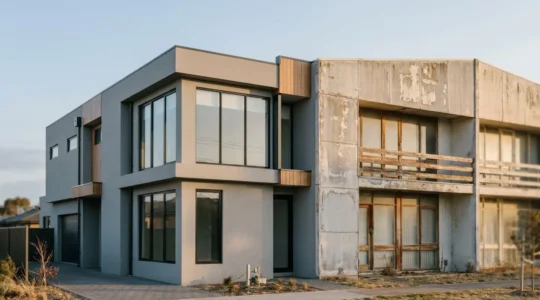
Which Exterior Facade Improvements Deliver the Highest Return?
High-ROI facade upgrades are not about aesthetics; they are a calculated investment in valuation arbitrage, where perceived value significantly outweighs…
Read more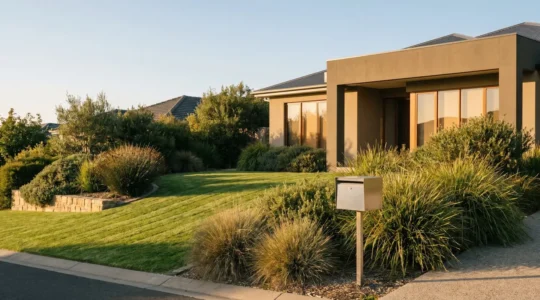
Landscaping ROI: A Cost-Benefit Analysis for Increasing UK Property Value
Investing in professional landscaping increases property value not by just adding ‘kerb appeal,’ but by strategically increasing your home’s functional,…
Read more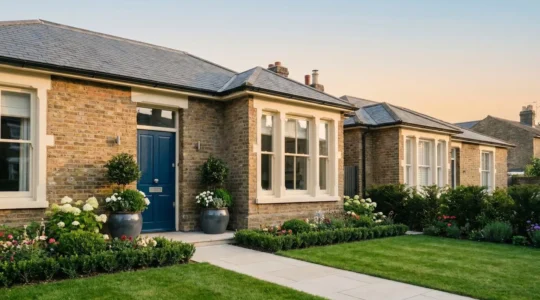
How Can Improving Curb Appeal Reduce Your Time on the Market?
A property’s first impression is a powerful financial tool that reduces selling time by signalling a well-maintained, problem-free home to…
Read more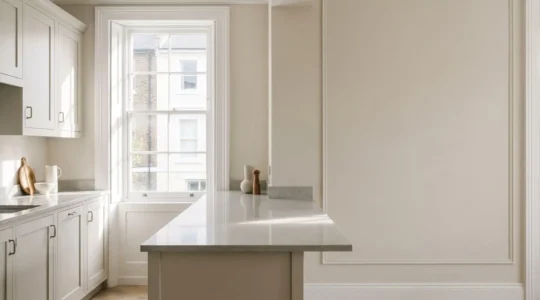
Which Kitchen Renovations Add the Most Value to a UK Home?
The true value of a kitchen or bathroom renovation isn’t measured by how much you spend, but by how accurately…
Read more
Are Smart Thermostats Worth the £250 Investment in a UK Home?
A £250 smart thermostat can pay for itself in under two years in a typical UK home, but only if…
Read more
Which UK Energy Upgrades Offer the Fastest Financial Payback?
The fastest payback on energy upgrades isn’t from the biggest project, but the smartest sequence: first, mitigate regulatory risk, then…
Read more